Concrete Crack Repair
Hairline cracks are often cosmetic, but a growing or offset crack is usually a sign of ongoing soil movement — and one of the most common trip-hazard liabilities on a residential or commercial property.
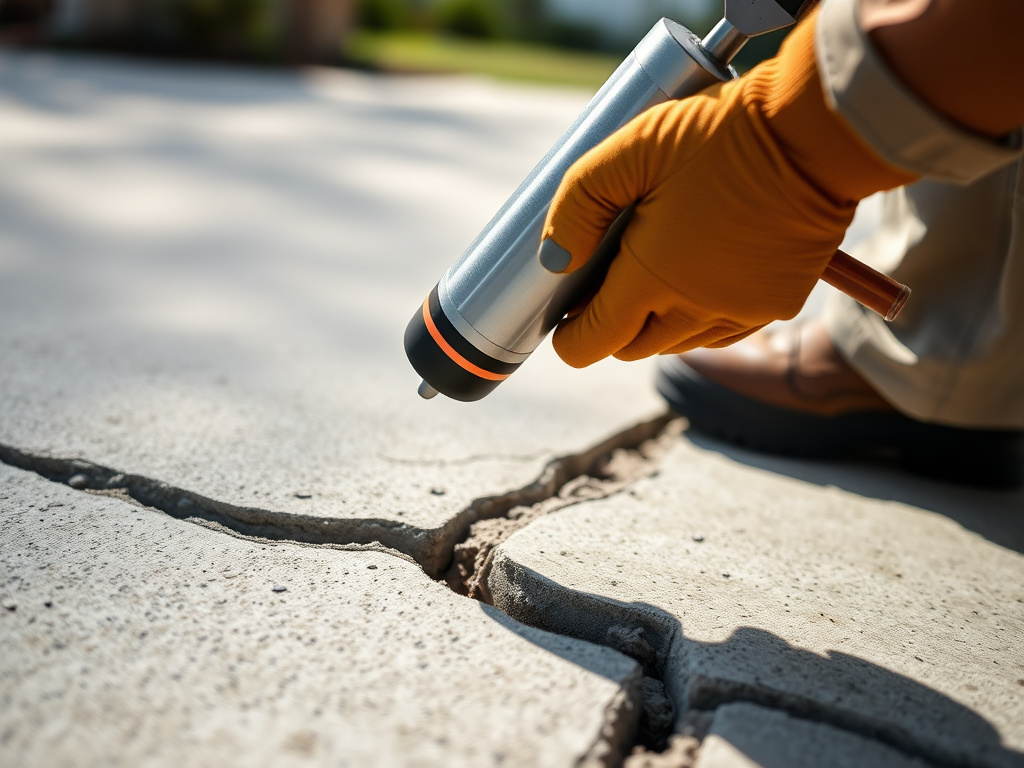
Every concrete slab develops some cracking eventually — Queen Creek's heat swings and expansive soil almost guarantee it. The real question isn't whether a crack exists, it's whether it's a cosmetic hairline crack, a shrinkage crack that formed during the original cure, or a structural crack driven by ongoing settlement. We diagnose which one you're looking at before recommending a fix, because the right repair method depends entirely on the cause.
Left alone, a crack that started as a hairline can widen with each monsoon-to-dry-season cycle, eventually creating an offset lip between the two slab edges — which is exactly the kind of trip hazard that turns into a liability problem on a walkway, porch, or commercial entrance. Catching and repairing cracks early is almost always cheaper and less disruptive than waiting until the slab needs leveling or replacement.
Why property owners choose it
- Stops a hairline crack from widening into a structural or trip-hazard problem.
- Structural epoxy and polyurethane injection restore load-bearing strength across the crack, not just a cosmetic patch.
- Far less expensive than slab replacement when caught early.
- Reduces trip-hazard and legal-exposure risk on walkways, driveways, and commercial entrances.
- Flexible polyurethane sealants move with the slab through Queen Creek's expansion-contraction cycles instead of cracking again immediately.
Surface sealing vs. structural injection
For stable, non-widening cracks, surface sealing with a polyurethane or silicone caulk keeps water out of the crack (critical during monsoon season, since water intrusion is what turns a small crack into a bigger settlement problem) and restores a cleaner appearance. This is the more budget-friendly option and works well on hairline and shrinkage cracks.
For structural cracks — ones with any vertical offset, active widening, or a clear connection to settlement — we use high-pressure epoxy or polyurethane injection. This forces material deep into the crack, bonding both sides back together and restoring real structural continuity across the slab, rather than just bridging the gap at the surface. This is the right call when a crack is a symptom of the same soil movement that causes slab settlement.
- Surface sealing: budget-friendly, keeps water out, best for stable hairline cracks
- Structural injection: restores load-bearing strength, best for widening or offset cracks
Why cracks matter as a trip-hazard and liability issue
An offset crack of even a quarter inch on a walkway is enough to catch a shoe or a wheel, and it's a documented standard that trip-hazard claims on residential and commercial properties frequently point to exactly this kind of unaddressed sidewalk or walkway defect. Property owners and HOAs in fast-growing communities like Queen Creek carry real legal exposure when a known walkway defect goes unrepaired, particularly on a commercial entrance or a rental property. Addressing cracks proactively — before an offset develops — is the cheapest way to manage that exposure.
Ideal for
- Driveway or garage-slab cracks that are widening or have a visible offset
- Sidewalk and walkway cracks creating a trip hazard
- Patio or pool deck cracking near a control joint
- Commercial property owners managing walkway liability exposure
What affects the cost
Crack Repair questions, answered
As general industry estimates: simple crack sealing typically runs $150 to $300 per crack, while structural epoxy or polyurethane injection for stable structural cracks typically runs $300 to $800 depending on total linear footage. Overall driveway repair work (crack repair plus any related resurfacing) commonly falls in the $3 to $25 per square foot range depending on scope. A free on-site assessment gets you an exact number.
Not usually on its own — nearly every concrete slab develops some hairline shrinkage cracking, especially in a climate with Queen Creek's heat swings. What matters is whether it's widening, developing a vertical offset, or letting water intrude during monsoon season. If it's stable and cosmetic, sealing it to keep water out is a smart, low-cost precaution. If it's growing, that's usually a sign of soil movement worth a professional assessment.
Crack Repair done right, by a local Queen Creek crew
Crack Repair isn't a commodity — the result depends entirely on how carefully it's diagnosed and executed for your specific slab and Queen Creek's real expansive soil. We assess what your concrete actually needs, prep the site properly, and work to the method that fits the problem, so the result holds up instead of needing the same fix again in a few years.
We serve Queen Creek, San Tan Valley, Gilbert, Chandler, Mesa, Apache Junction, Florence, and Coolidge. Every job starts with a free, no-pressure on-site assessment.
Just as important, we treat your property like the system it is. Concrete, drainage, and grading all interact, and fixing one while ignoring the others leaves the underlying cause in place. When we scope your crack repair, we look at how it fits the whole picture — so the finished result performs the way it should, holds up through the next monsoon season, and actually solves the problem you called about.
Free assessment
We evaluate the concrete and give you a clear, itemized estimate.
Expert execution
We prep the site and complete your crack repair to spec — clean and on schedule.
A fix that holds
A properly diagnosed repair, honest advice, and work built for real Queen Creek soil.
Related services
Ready for a free crack repair estimate?
Tell us about your driveway, patio, or slab and we'll put together a clear, no-pressure estimate — built for Queen Creek's real soil and climate.