Concrete Repair Cost in Queen Creek, AZ: 2026 Guide
If you've gotten a few concrete repair quotes in Queen Creek and they came back all over the map, that's normal — concrete repair pricing genuinely depends on more variables than almost any other home repair category. What's actually wrong (a hairline crack vs. a settled slab vs. failed surface finish), which repair method fits the problem, how much square footage is involved, and how our expansive clay and caliche soil has behaved under that specific slab all move the final number.
This guide breaks down real-world 2026 cost ranges for every major type of concrete work we do in Queen Creek — crack repair, slab leveling, driveway resurfacing, new pours, and foundation-adjacent repair — and explains the soil and climate factors that make Queen Creek pricing different from a generic national average. Every number here is a typical industry range, not a quote for your specific property. Slab thickness, access, existing damage, and soil condition all move the final price, which is why a free on-site assessment is the only way to get an exact figure.
Concrete crack repair cost
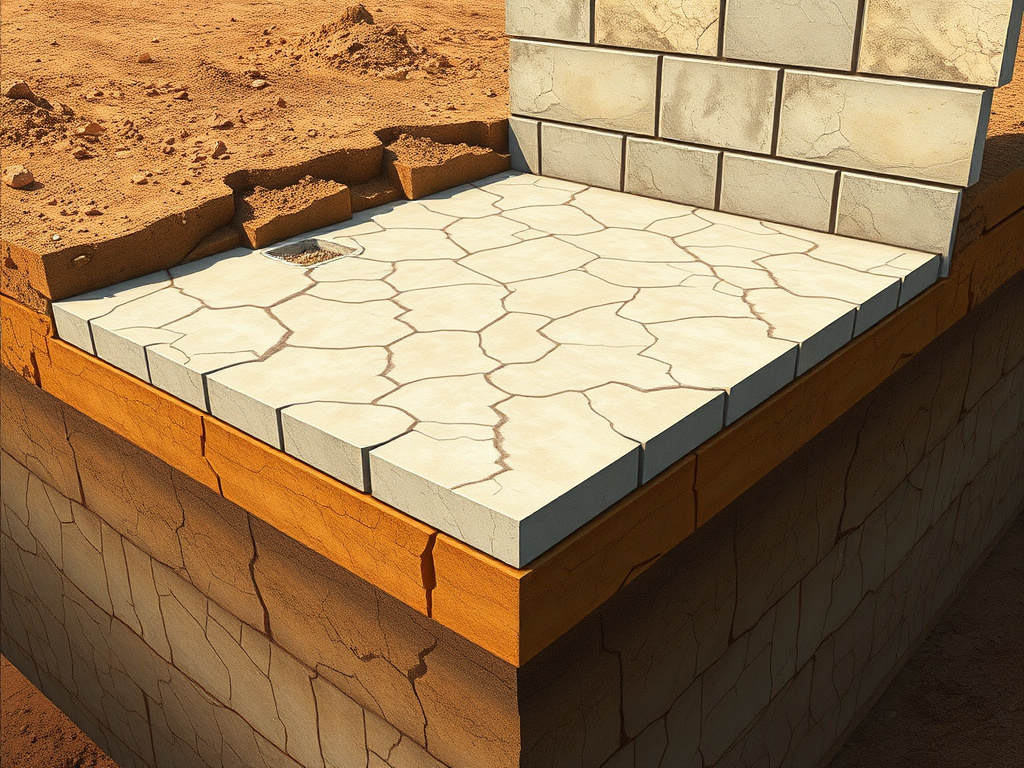
Crack repair pricing splits into two tiers depending on severity. Simple surface sealing — caulking a stable, non-widening hairline or shrinkage crack with a polyurethane or silicone sealant to keep monsoon moisture out — typically runs $150 to $300 per crack for professional application. For structural cracks showing a vertical offset or active widening, high-pressure epoxy or polyurethane injection is the right call, and that typically runs $300 to $800 depending on total linear footage, since it involves forcing material deep into the crack to restore real structural bonding across the slab.
The single biggest mistake we see homeowners make on crack repair cost is waiting. A stable hairline crack that would cost $150-$300 to seal today can, after a few more monsoon-to-dry-season cycles, develop into an offset structural crack running $300-$800 to properly inject — or, in the worst cases, into a settlement problem needing full slab leveling. Sealing early isn't just about appearance; it's the cheapest point in the crack's lifecycle to fix it.
Concrete slab leveling and mudjacking cost
When a driveway apron, sidewalk panel, or patio slab has settled and needs to be raised back to grade rather than replaced, you're choosing between two methods with meaningfully different pricing. Mudjacking — pumping a cement-based slurry beneath the slab — typically runs $3 to $6 per square foot as a general industry estimate. Polyurethane foam injection typically runs $5 to $25 per square foot, reflecting the material cost of high-density expanding foam versus mudjacking's cement-based slurry.
- Mudjacking: $3-$6/sq ft, 24-48 hour cure, larger 1-2 inch injection holes, heavier fill material
- Polyurethane foam lifting: $5-$25/sq ft, roughly 15-minute cure, smaller 5/8 inch ports, far lighter fill (roughly 2 lb/cu ft vs. 100+ lb/cu ft for mudjacking slurry)
- Most contractors carry a minimum job charge regardless of method — ask about it upfront for small, contained repairs
Why the range within each method is so wide: the primary driver isn't square footage alone, it's how far the slab has to rise and how large the void underneath it is. A slab that's settled half an inch needs far less material than one that's settled two inches, even at the same square footage.
Driveway repair and resurfacing cost
Driveway work spans the widest cost range of any category we quote, because "driveway repair" can mean anything from sealing a single crack to a full tear-out and replacement. As a general industry estimate, driveway repair in 2026 typically runs $3 to $25 per square foot depending on scope — targeted crack repair and patching sit at the lower end, a full bonded resurface overlay sits in the middle, and tear-out-and-repour sits at the top.
Resurfacing is often the sweet spot for a driveway that's uniformly worn or pitted but structurally sound — you get a completely refreshed surface at meaningfully less cost than replacement, since the existing slab stays in place as the structural base for the new overlay.
New concrete pours and flatwork cost
New patios, walkways, driveway sections, and equipment pads are priced primarily by square footage and thickness, with base prep as the second major factor. Because Queen Creek's expansive clay and caliche soil requires real compaction and, in some cases, moisture conditioning before concrete goes down, base prep is not a place to cut corners for cost — skipping it is exactly how a brand-new pour ends up needing slab leveling within a few years instead of a few decades. Reinforcement choice (wire mesh vs. rebar) and finish (standard broom vs. stamped or decorative) are the other two levers that move new-pour pricing.
Stamped and decorative concrete cost
Stamped and decorative finishes add cost over standard broom-finished concrete, driven mainly by pattern complexity and color method (integral color mixed into the concrete vs. applied color hardener or stain). Even with that premium, stamped concrete typically costs meaningfully less than natural stone or paver installation of comparable size and appearance, since it avoids the labor-intensive unit-by-unit installation that stone and pavers require. Ongoing resealing every 2-3 years — sooner for pool decks — is a maintenance cost worth budgeting for, not a one-time expense.
Foundation and stem wall repair cost
Foundation-adjacent repair — stem wall crack sealing, spalling repair, and drainage correction around the foundation perimeter — is priced project-by-project more than by a simple per-square-foot rate, since scope varies enormously between isolated cosmetic spalling and settlement affecting multiple sides of a structure. Projects that also need a structural engineer's evaluation carry that professional cost on top of the concrete repair itself. This is one category where an accurate estimate genuinely requires an in-person assessment rather than a phone estimate.
What actually drives Queen Creek pricing higher or lower
- Soil condition under the specific slab — a larger void or more severe settlement takes more material to correct at any method
- Access — a garage slab or pool deck may take more labor time to reach than a straightforward driveway apron
- Existing damage extent — more cracking or a larger settled area scales cost roughly with severity
- Method choice — polyurethane costs more upfront than mudjacking but cures faster and adds far less weight
- Finish choice on new work — standard broom finish is the most economical; stamped and decorative finishes cost more
A note on timing and Queen Creek's seasons
Concrete repair can be scheduled year-round in Queen Creek, but there are practical reasons to avoid waiting until the peak of monsoon season for anything involving open excavation or exposed base prep — heavy rain can complicate timing and, in some cases, add cost if work has to pause. For crack sealing specifically, addressing a crack before the next monsoon (roughly mid-June through the end of September) keeps water from working its way in and doing more damage over that wet season. For new pours, spring and fall generally offer the most workable temperatures for both the crew and the curing concrete, though summer pours are absolutely doable with the right scheduling and curing approach.
Frequently asked questions
A stable hairline crack caught early and sealed before it widens is typically the least expensive fix, running roughly $150-$300. Waiting lets a hairline crack potentially progress into a more expensive structural injection repair or, eventually, a slab-leveling project.
Financing availability varies by contractor and project size. Ask about options during your free on-site assessment — for larger new-pour, replacement, or foundation-related projects, financing can make a meaningful project more manageable upfront.
Not usually to the degree you'd want for budgeting. Because crack severity, slab settlement depth, and soil condition are all things that need to be seen in person, a phone estimate can only give you a rough ballpark. A free on-site assessment is what actually locks in an accurate number.
Ready for a free estimate?
Tell us about your project and we'll build a clear, no-pressure estimate.