Why Is My Concrete Cracking? Queen Creek's Expansive Clay and Caliche Soil, Explained
"Why is my brand-new driveway already cracking?" is one of the most common questions we hear from Queen Creek homeowners — often from people who did everything right, hired a reputable contractor, and still ended up with a cracked or unevenly settled slab a few years later. In the vast majority of cases, the honest answer isn't bad concrete or bad workmanship. It's the ground underneath.
What makes Queen Creek's soil different
Queen Creek and much of the surrounding East Valley sit on a basin of ancient alluvial and lakebed deposits. Two soil characteristics in that basin matter enormously for anyone pouring or owning concrete here: expansive clay content, and a hard, cemented layer called caliche typically found around 2 to 4 feet below the surface.
Expansive clay: the swell-shrink engine
Expansive clay soil is exactly what it sounds like — clay minerals that physically swell when they absorb water and shrink back down as they dry out. This isn't a minor effect. In soil with significant expansive clay content, the volume change between fully wet and fully dry conditions can be substantial enough to noticeably move whatever is sitting on top of it, whether that's a slab, a foundation, or a fence post.
Caliche: a hard layer with its own quirks
Caliche is soil cemented together by calcium carbonate into a dense, often rock-hard layer. It's common across the Queen Creek area at shallow depth, and it plays two roles that matter for concrete work. First, it can complicate excavation for new pours, since it's genuinely difficult to dig through in places. Second, and less obviously, caliche layers can fracture or shift during heavy monsoon flooding, which changes how stable the soil above and below that layer behaves — sometimes contributing to settlement in ways that aren't visible until well after the storm season that caused them.
How the swell-shrink cycle actually cracks a slab
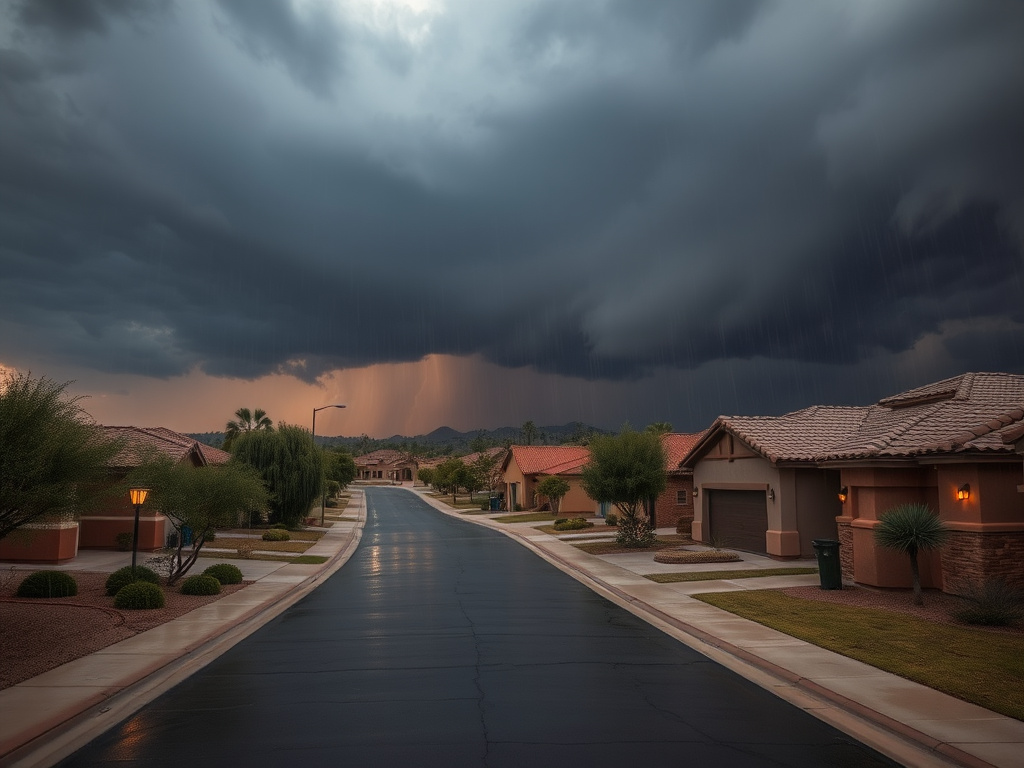
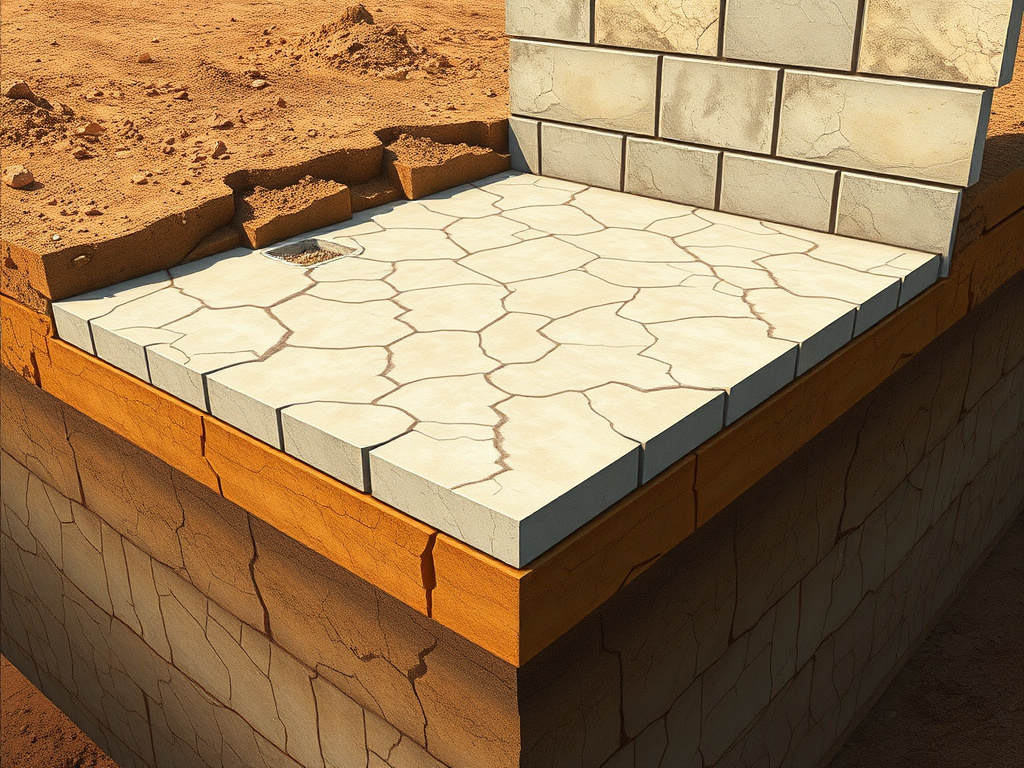
Here's the mechanism in plain terms. During Arizona's monsoon season — roughly mid-June through the end of September — heavy, concentrated rainfall soaks into the soil around and under concrete slabs. Expansive clay in that soil absorbs the moisture and swells, sometimes pushing up slightly on whatever's above it. As the long dry season sets in afterward — which is most of the year in Queen Creek — that same clay dries out and shrinks, often pulling away from the underside of a slab and leaving a void where solid contact used to be.
Repeat that cycle every year for several years and a few things tend to happen. Voids left by shrinking clay give a slab room to settle into, unevenly, wherever the soil moved most. Concrete that's now spanning a partial void without full support underneath is more prone to cracking under normal load — a car, foot traffic, even its own weight. And drainage patterns that concentrate water in one spot (a downspout, a low corner, a slope toward the house instead of away from it) create localized "hot spots" where this cycle is more severe than elsewhere on the same property.
What this means for existing cracked or settled concrete
If you're looking at a cracked driveway, a sunken sidewalk panel, or stem wall spalling, understanding the expansive-soil mechanism changes how you think about the fix. Patching a crack without addressing nearby drainage that's still feeding the swell-shrink cycle often means the same problem returns nearby a few years later. That's why we look at drainage and grading as part of any concrete assessment, not just the visible crack or settled slab itself.
What this means for new concrete
For new pours, the practical takeaway is that base prep matters more here than in a lot of the country. Proper aggregate base compaction, moisture-conditioning the subgrade where appropriate, correctly sized reinforcement, and control joints spaced to the slab's real dimensions all reduce — though can't completely eliminate — the long-term effects of expansive soil. A new slab poured without that prep work is essentially starting the same settlement clock as an old, poorly prepped one, just from day one instead of decade three.
The bottom line
Concrete cracking and settlement in Queen Creek is rarely a mystery once you understand the soil. It's not usually about bad concrete — it's about ground that genuinely moves with the seasons, in a way that concrete poured in a lot of other climates never has to contend with. Knowing that doesn't fix a cracked driveway on its own, but it does explain why the right repair often involves looking at drainage and soil, not just patching what's visible on the surface.
Frequently asked questions
A geotechnical engineer can perform soil testing (including Atterberg limits and expansion index testing) to quantify how expansive your specific soil is, which is standard practice before major new construction. For repair-scale concrete work, we typically assess visible evidence of soil movement and drainage patterns directly rather than requiring formal soil testing, though we'll recommend an engineer's evaluation when a situation calls for it.
It can, especially if irrigation or a sprinkler head is regularly wetting soil right next to a slab or foundation while the rest of the yard dries out normally — that creates an uneven, localized version of the same swell-shrink cycle. Keeping consistent, even moisture (or consistent dryness) near foundations and slabs, rather than alternating extremes, is generally the better goal.
Ready for a free estimate?
Tell us about your project and we'll build a clear, no-pressure estimate.